
A plain comparison of the three main ways to connect business systems, from a Platinum Zapier Solution Partner and Make partner that builds all three.
Book your free consultation

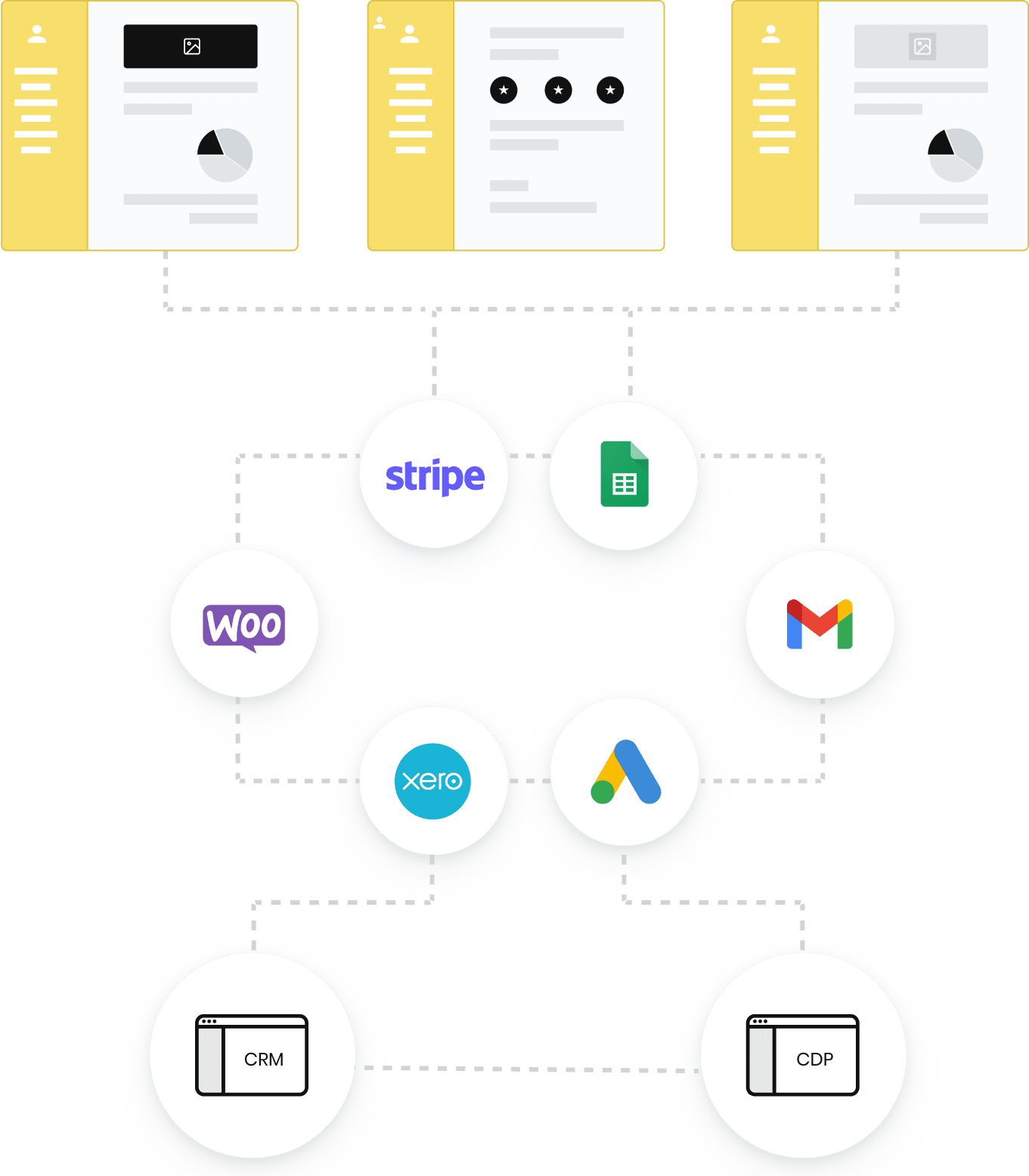
Use Zapier for straightforward workflows between popular apps, especially when your team wants to understand and adjust them. Use Make for workflows with complex logic, many steps or heavy data transformation. Use a custom integration when there is no connector, records must stay in sync both ways, volumes are high, or security and governance call for infrastructure you own.
Many businesses use more than one. A common setup is built-in platform automation for single-platform processes, Zapier or Make for connections between apps, and a custom integration for one high-volume or business-critical sync.
Before choosing a connector, check what the platform already does. CRMs and project tools such as HubSpot, Pipedrive, Salesforce and monday.com include their own automation for processes that stay inside one platform, at no extra cost.
For healthcare workflows that handle patient information, Keragon is a HIPAA-compliant alternative to Zapier and Make.


Best for: straightforward workflows across thousands of popular apps. Pricing: a monthly plan based on the number of tasks run. Setup: fast, often days. Ownership: zaps run in your own Zapier account.

Best for: complex workflows with branching logic, loops and data transformation. Pricing: a monthly plan based on usage, often lower than Zapier at high volume. Setup: fast, often days. Ownership: scenarios run in your own Make account.

Best for: no connector, two-way sync, high volume, legacy systems or strict security needs. Pricing: higher build cost, then AWS usage billed directly to you. Setup: usually weeks. Ownership: code and infrastructure in your own AWS account.

A 15-minute call to understand your requirements and the apps involved.

We scope the project based on its complexity at $250+GST per hour and send a proposal. It is a one-off project cost with no ongoing fees.

Timeframes depend on size and complexity. As a guide, most builds start within 5 business days and are complete within 15 business days. Every project includes 10 business days of monitoring after go-live. Documentation, user guides and team training can be added if you need them.
Some of the businesses we have built Zapier, Make and custom integrations for.


